Whale sharks, manta rays and humpback whales are three of the animals people most want to see on the Great Barrier Reef, and none of them keeps a timetable. What the Reef's managers and researchers do publish is when each animal tends to show up. This guide pulls those timings together, says plainly where the evidence is thin, and covers the rules for sharing the water with whales. No guide can promise a sighting, so think of the months below as odds, not appointments.
Whale sharks: the biggest fish in the sea
The whale shark (Rhincodon typus) is the world's largest fish. The Reef Authority (the Great Barrier Reef Marine Park Authority) says whale sharks grow up to 18 metres. Each one has a pattern of spots that is unique to it. They feed on plankton and small fish, and the Reef Authority says they pose no risk to people.
When are whale sharks seen on the Reef?
According to the Reef Authority, sightings happen year round, but peak activity on the Reef is usually November and December, matching the fish and coral spawning seasons. Its February 2026 update said the latest Eye on the Reef findings showed a surge in whale shark activity, with reefs off Townsville and the Far North becoming areas of interest, and that eight sightings had been recorded in the previous four months, an unusually high number for that period. It also said little is known about where whale shark aggregations form on the Reef and that more sightings are needed to find any pattern.
The Reef Authority has logged more than 200 whale shark sightings through its Eye on the Reef app over time, and it asks reef-goers to add theirs, even old ones, so researchers can see long-term patterns. If you see one, that is how to help.
Manta rays: filter feeders with a seasonal rhythm
The Reef Authority lists manta rays among the Great Barrier Reef's "Great 8" icons. In Australia, Fishes of Australia says divers are more likely to meet the reef manta ray (Mobula alfredi) than the giant manta ray (Mobula birostris). Both are accepted names in the World Register of Marine Species, and the reef manta was formerly placed in the genus Manta, so you may still see the older name.
- How they feed. Mantas sieve plankton from the water through modified gills, feeding both near the surface and in deeper water.
- Where they gather. Fishes of Australia says they make seasonal migrations and gather at certain sites, probably when plankton is most productive.
- Conservation status. The reef manta ray is listed as Vulnerable on the IUCN Red List. Females are thought to carry a pup for 12 to 13 months and usually give birth to a single pup every two to three years.
When are manta rays seen?
A well-studied manta site on the Reef is Lady Elliot Island in the southern Reef, a long way south of Townsville. A 2012 study in the journal PLOS ONE found that manta rays are present there all year round, with peaks in abundance in autumn and winter. We could not find an equivalent published timetable for the central Reef near Townsville, so we will not guess one. If you are planning a manta trip, ask a high standard tourism operator what they are seeing that month.
Humpback whales: May to September
Humpback whales (Megaptera novaeangliae) come from Antarctic waters to the Reef's World Heritage Area from May to September, according to the Reef Authority. They calve and build strength over the winter, then head back to the Antarctic in summer.
The Reef Authority notes that whaling in the 1940s, 1950s and early 1960s cut the Reef-region humpback population to a few hundred animals, and that the east Australian population has been recovering since whaling stopped. It also says that humpbacks, dwarf minke whales and bottlenose dolphins are among the most commonly sighted whales and dolphins on the Reef, out of around 30 species recorded there. Under Queensland law, humpbacks are now classed as Least Concern, as of November 2023.
Whale watching rules
In a 2023 media release, the Reef Authority set out these distances for the Marine Park. Rules can change, so check its site before you head out.
- Boats must stay at least 100 metres from whales, and 300 metres from a whale calf. In the Whitsundays Whale Protection Area the Reef Authority sets 300 metres for vessels.
- Do not enter the water within 100 metres of a whale or 50 metres of a dolphin.
- If a whale approaches you in the water, do not swim towards it, and keep at least 30 metres away. If it is safe, return to your vessel.
- Aircraft, including drones, have their own limits. Read the Reef Authority's rules before you fly one near whales.
What this means for planning a trip
- Whale sharks: any month is possible, with November and December the usual peak on the Reef.
- Manta rays: year-round at Lady Elliot Island, with peaks in autumn and winter. Central Reef timing is not confirmed.
- Humpback whales: May to September.
- Ask your operator what they have seen lately, and let the animals set the distance.
Take the Reef home
If these animals are your favourites, we have designed a lot of things around them. Browse our whale shark gifts and merch, our manta ray designs and our whale gifts and merch, or see shark gifts for more big fish. A few starting points:
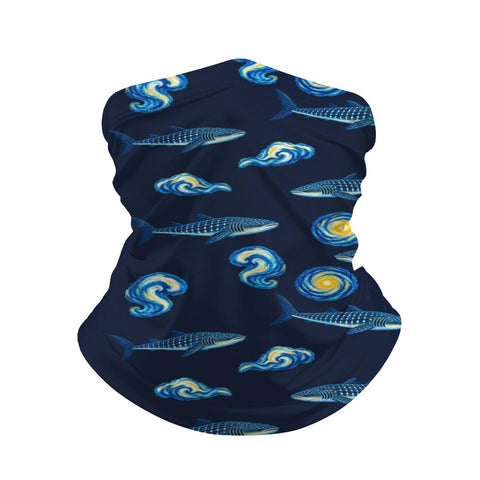
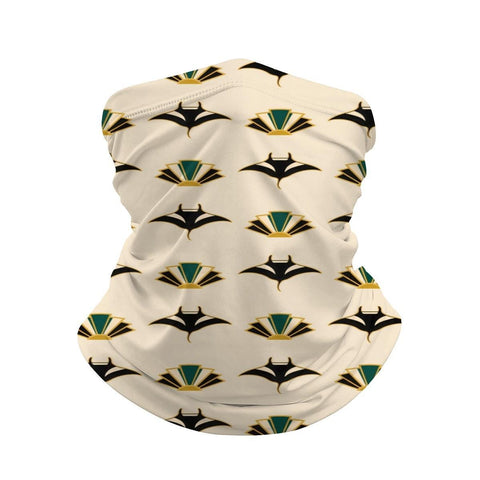
- The Art Deco manta ray neck gaiter and the post-impressionist whale shark neck gaiter.
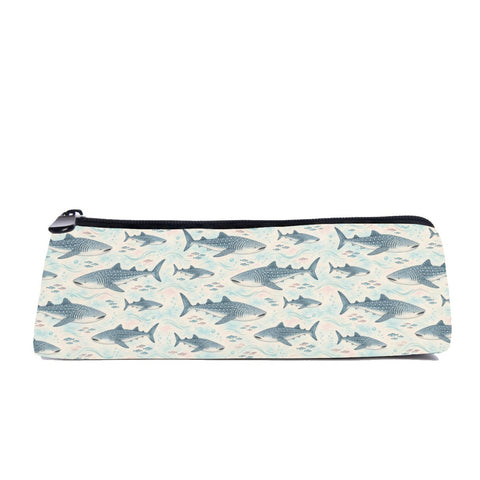
- The whale shark pencil case, a slim zip case for pens, markers and small things.
- Hoodies from the hoodies collection, including whale shark, manta ray and humpback designs.
Everything is made to order by our print partners, with free shipping to every country we deliver to and 30-day returns. For more reef guides, read our guide to sea turtles on the Great Barrier Reef or our guide to nudibranchs you might see on the Reef.
Keep reading. See where to swim and when in our guide to snorkelling on Magnetic Island, or the gifts for scuba divers guide.
Sources, checked 22 November 2026
- Reef Authority, whale shark sightings surge (9 February 2026): gbrmpa.gov.au
- Reef Authority, whales and dolphins (updated 12 October 2026): gbrmpa.gov.au
- Reef Authority, whale season release (14 July 2023): gbrmpa.gov.au
- Reef Authority, Great 8 (updated 13 December 2022): gbrmpa.gov.au
- Fishes of Australia, reef manta ray (Museums Victoria): fishesofaustralia.net.au
- Jaine et al. 2012, PLOS ONE, manta rays at Lady Elliot Island: journals.plos.org
- World Register of Marine Species, accepted names read 22 November 2026: marinespecies.org